12 January 2026 · by Dr. Meghna Gupta
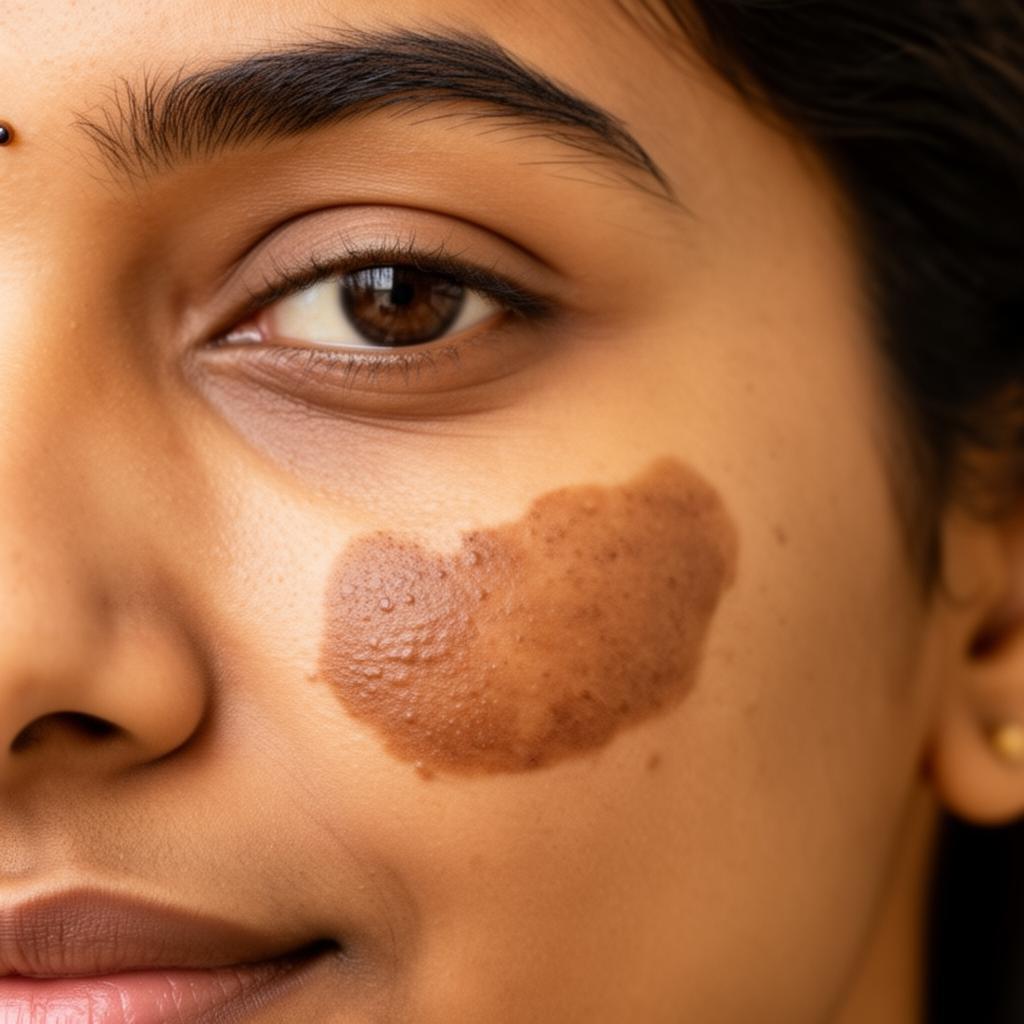
Melasma is the single most frustrating pigment disorder we treat. It is chronic, it flares with sun and hormones, and it is famously prone to coming back, sometimes worse than before, when the wrong protocol is used. Patients have often tried six different creams, a couple of peels, and at least one ill-advised laser session before they walk into our clinic.
This is the protocol we use, in plain language. It works because it respects the biology of melasma in Indian skin, instead of trying to bully it into submission.
Why melasma is different from "regular" pigmentation
Melasma is not sun damage. It is not post-inflammatory hyperpigmentation. It is a distinct condition driven by a combination of UV light, visible light, heat, hormones (oestrogen, progesterone), and a genetic predisposition. It typically appears on the cheeks, forehead, upper lip, and jawline in symmetric patches with diffuse borders.
This combination of triggers is why melasma is so persistent. You can fade the surface pigment, but if you have not addressed sun exposure, visible light, heat, hormonal triggers, and the inflammatory cascade underneath, the pigment will return. Often within weeks. Treating melasma without controlling the triggers is like trying to dry a floor with the tap still running.
What goes wrong when melasma is mistreated
The most common pattern of mistreatment looks like this. The patient is given a strong topical (often a triple-combination cream with a steroid). It works for six to eight weeks, then plateaus. Frustrated, they get a chemical peel or an aggressive laser session. The skin flares, the pigment intensifies, and sometimes a new pattern of pigmentation appears that was not there before.
In our clinic we treat melasma in four stages, in a specific order, over a longer time frame. Each stage has a purpose, and skipping any of them is what causes relapse.
Step 1: Calm and prepare (weeks 0 to 4)
Before we depigment anything, we need to reduce the underlying inflammation and prepare the skin to tolerate active ingredients without flaring. This usually means a gentle, fragrance-free cleanser, a barrier-supportive moisturiser with ceramides or niacinamide, and a strong, well-formulated sunscreen: broad spectrum, SPF 50, with iron oxides to block visible light. A tinted sunscreen is genuinely better here than a clear one, because visible light is a major melasma trigger that clear sunscreens do not block.
We are also explicit about heat. Hot showers, hot yoga, sauna sessions, prolonged cooking over an open flame, even sitting close to a laptop on your face. All of these contribute. We are not telling patients to live in a cave; we are telling them that heat is a real trigger and reducing it where they can will pay off.
During this phase we also address obvious hormonal triggers where present. Combined oral contraceptives can drive melasma; if a patient is on one, we have a conversation about alternatives with their gynaecologist.
Step 2: Active depigmentation (weeks 4 to 12)
Now that the skin is calm and protected, we introduce the depigmenting agents. The workhorse here is still topical hydroquinone, used in short courses (typically twelve weeks at a time, with breaks), often combined with a retinoid and a mild anti-inflammatory. We add oral tranexamic acid for moderate to severe cases. This has very good evidence in melasma and is well-tolerated in most patients after a basic screening.
Alternatives and adjuncts include cysteamine, azelaic acid, kojic acid, alpha arbutin, and topical tranexamic acid. The right combination depends on your tolerance and severity.
What we don't do at this stage: aggressive lasers, deep peels, or strong scrubs. Anything that creates heat or trauma at this point can flip melasma into a worse pattern.
Step 3: Gentle in-clinic procedures (weeks 12 onwards)
Once the topicals have done the heavy lifting, we add carefully selected in-clinic procedures. These are not the dramatic peels or aggressive lasers that get advertised. They are the boring, well-tolerated ones: superficial lactic or mandelic acid peels, very-low-energy Q-switched or pico toning sessions, sometimes mesotherapy with tranexamic acid.
These sessions are spaced three to four weeks apart and used in courses of four to six. The goal is to nudge the result a step further, not to chase a transformation.
The choice of device and energy here is where most clinics go wrong. We use the lowest effective setting and stop the moment the skin shows any signal of irritation. Slower is safer. Slower is also, ultimately, faster, because there is no rebound flare to recover from.
Step 4: Maintenance (lifelong)
This is the step that most patients hate to hear about and that everyone with melasma needs. Once the pigment is controlled, you go onto a long-term maintenance protocol: usually a gentler topical (azelaic acid, niacinamide, low-strength retinoid), the same daily sunscreen and visible-light protection, ongoing heat awareness, and a periodic in-clinic top-up session two to four times a year.
Patients who do the maintenance keep their result for years. Patients who stop everything as soon as their skin looks good usually relapse within six to twelve months, and then come back convinced that "nothing works for them," when in fact the treatment did work; they just stopped maintaining it.
Honest expectations
Even a perfectly executed protocol does not deliver completely uniform skin in every patient. Melasma is a controllable condition, not a curable one. Realistic outcomes look like a 60 to 80 percent reduction in visible pigment, much more even tone, and a treatment plan that keeps that result steady year after year. For some patients the result is dramatic; for some it is more modest. Both are wins compared to the alternating cycle of flare and crash.
We are also honest about timing. Most patients see the first meaningful change at week eight and the major improvement at month three to four. The journey from "first visible improvement" to "stable, well-controlled" is usually six to nine months. Pregnancy, hormonal medications, and intense summer exposure can each set the timeline back, and we factor those in.
Special situations
Pregnancy-related melasma (chloasma) often improves on its own after delivery and after breastfeeding ends. We typically avoid most active ingredients during pregnancy and lactation. Sunscreen and gentle barrier care are the focus, and we resume the full protocol when it is safe.
Perimenopausal melasma can be one of the trickier presentations because the hormonal background is itself changing. The protocol is essentially the same, but with extra patience and more emphasis on the maintenance phase.
Male melasma is more common than people realise, particularly along the temples and jawline. The same protocol applies, with the caveat that men are sometimes less diligent about sunscreen, which is the protocol's most important step.
Melasma is a marathon. The patients who do best are the ones who accept that early and plan for it, rather than the ones who chase quick wins and start over every six months. With the right plan, calm, well-toned skin is achievable. With the wrong plan, you will keep cycling through the same flare. We would rather show you the long game on day one.